For those who have been told they're behind
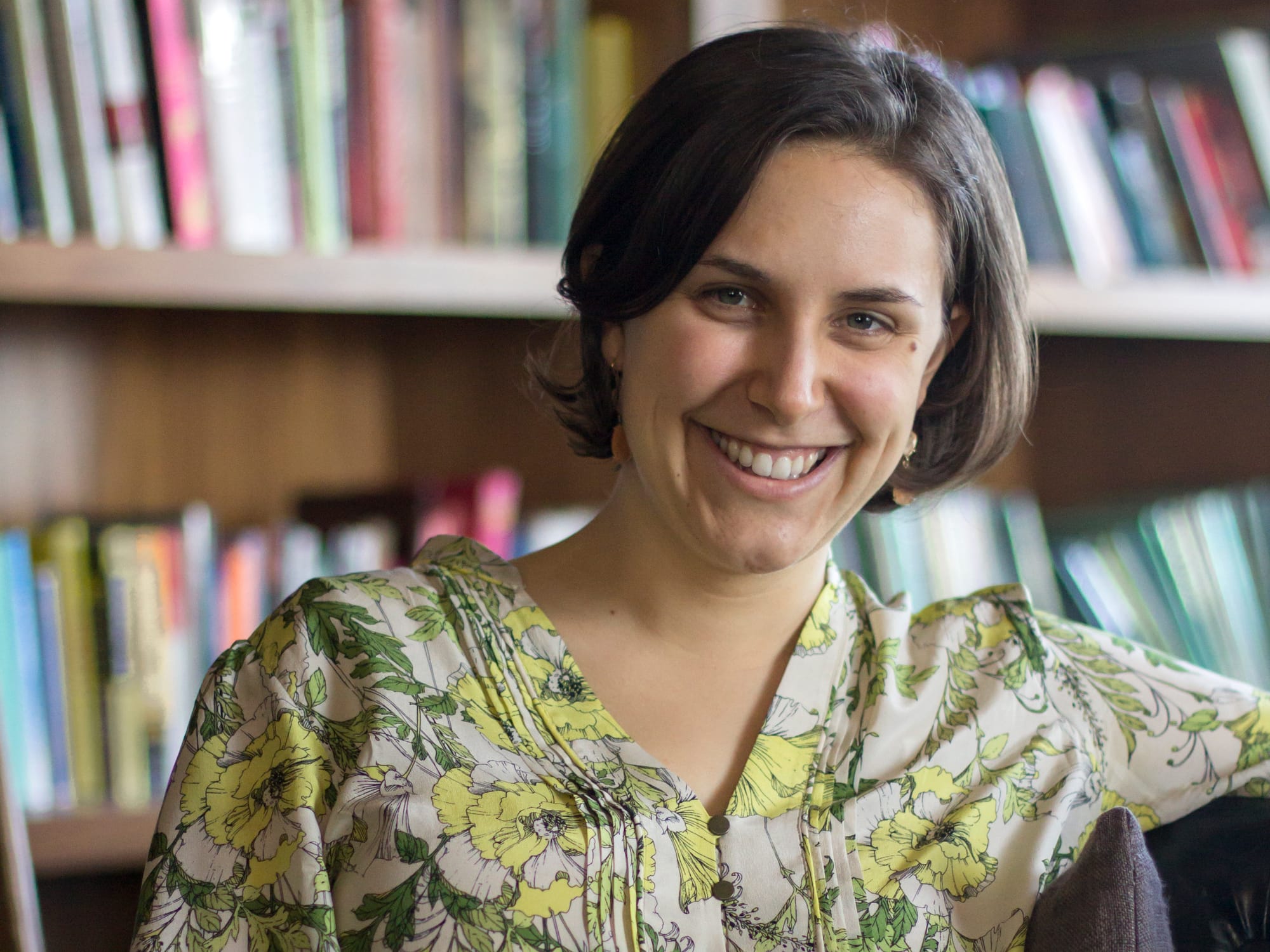
by Amy Schaffer

The other day I was watching an interview with Jane Friedman, who has been on the forefront of educating and helping writers for years. Her newsletter list is one of the first ones I joined ten years ago, and I'm still on it today.
But there was something at the end of this interview that made me pause. She said (starting at 37:25), "This is not a mandate [that] everyone needs to go and use [AI] now. But I think if you're refusing to use it on principle, I think eventually everyone else is going to lose their inhibitions and they're going to start using it and then you're going to be at a disadvantage."
(For clarity, she's talking about using AI for marketing, admin, research, and/or brainstorming, not for writing books. The entire answer is a lot more nuanced and thorough than this small quote gives credit for. You can listen to the whole thing, including the question, starting around the 35 mark.)
I want to focus on this quote, not to debate AI and whether you should use it, but because of this portion right here: they're going to start using it and then you're going to be at a disadvantage.
Is there any feeling more common than that of feeling behind? It follows us to school, our job, our retirement account, our home. It's one of the cornerstones of capitalism that keeps you constantly looking at everyone else to see how you rank. In a race with no actual rules or metrics to measure yourself by, the only way to guarantee you still have a fighting chance in the race is to just do more every time the opportunity presents itself.
But let me ask you something we often forget to ask ourselves. Do the people you're comparing yourself to have lives you even want?
A life well lived doesn't mean you come out ahead of everyone else in a race you didn't want to enter in the first place. It's a life where you intentionally make choices based on where you want to go, even if they take you miles away from the finish line everyone else is striving for.
In fact, the best lived life is a race where you are the only participant because you've stopped looking around to see if there are any other competitors. You have your own priorities and the game is to figure out how to achieve them regardless of what anyone else thinks.
It's hard, though! Not only do we have people in our lives with strong opinions about our choices, we also have access to huge databases of information that make comparison easier than ever before. Social media, chatbots, wearable devices, influencers, the apps on our phones, the emails in our inbox, and more are constantly showing us all the ways we're behind. How are we supposed to stick to our own path when so many sources are trying to pull us back into a race that isn't our own?
Define what you want
When you don't know what you want in life, so it's much easier to get pulled any which way because you have nothing to anchor to.
The most behind I ever felt was when I refused to define what I wanted. Why would I do that? Because some part of me knew that if I did, I would have zero excuses for continuing down the safe, secure path. Pretending I didn't want the life I wanted was less scary.
But that meant everyone else got to dictate my actions. I took classes and pursued a degree I had no interest in because they seemed prestigious. I took jobs that killed me a little every day because someone authoritative suggested they would be good opportunities. I even sang music in voice lessons for five years that I didn't really have a connection to because it seemed like the music my teacher wanted me to learn.
All that led to burn out, mental and physical health issues, and me being even further from where I wanted to be once I finally allowed myself to examine why I felt so bad.
If you don't know what you're aiming for, you can never get there. It's really as simple as that. You can make adjustments to your plan along the way (my friend and book coach Lauren Marie Fleming creates a new life blueprint every two years). You can make a formal document or have a general direction. You can go slow or fast. But you have to have something to guide you so you can...
Take responsibility for your choices
This is the scary part.
I think many of us would rather poll a hundred people about what we should do next or trust a chatbot who is pulling information from God knows where (but sounds confident doing so) then actually put a stake in the ground and say, this is what I want and this decision is what gets me closer to it, so that is what I'm choosing.
What if I'm wrong????? That's the question my inner critic always wants to know. It feels better to have someone else make the decision and be wrong than for me to make the decision and be wrong because at least I get to blame someone else as everything is going up in flames.
Intentionality requires a level of responsibility that doesn't come with doing what you're "supposed" to be doing. It means you don't get to claim victimhood if things fall apart. It means potentially facing criticism for not keeping up or for going down the unbeaten path.
But intentionality also means you'll never be left wondering, what might have happened if... According to Bronnie Ware, one of the biggest regrets of the dying is not living the life that was true to themself. There's no guarantee you'll get everything you want, and as you go down the intentional path, the things you want might turn out not to be the things you want at all. But you'll probably find at the end of your life that all the potential criticism and the uncertainty of something that's yours was worth it because you got to go after something that was actually meaningful to you.
Start with small steps
We are human beings with nervous systems, and our nervous systems have spent years building safety around your current lifestyle. If you quit your city job, move to a cabin in the woods, and try to live off the land with no experience, transition time, or set up, you're probably going to experience a (literal) nervous breakdown. That and you'll find yourself hungry really quickly.
But even if you aren't taking steps quite that drastic, smaller steps are a good idea because it's incredibly hard to predict what you actually want until you've tried things out. And if you take a massive step first rather than a small step, it becomes harder to be honest with yourself about what the next step should be.
When I first started writing, I went all in. I learned about traditional vs. self publishing, how to build marketing funnels, how to edit a book, how to craft a book based on the hero's journey, how to use Scrivner, etc. And I did all this while writing the book. While it was great information, it also became overwhelming quickly. It felt like I had committed to a career path without even knowing if my book was going to make it out of the starting gate, and when it didn't, I didn't know if it was because of the format, the story, the fear of starting my own business, or something else. I just assumed I wasn't meant to write fiction and stopped writing altogether for a few years.
Versus when I began to wonder if I should finally pursue my dream of working in Hollywood, I took an Intro to Screenwriting class at UCLA. One of our guest speakers, a full-time screenwriter, described her career to us. And as I listened, I realized very quickly I did not have the energy to even listen to how hard she hustled, let alone do it myself. I quickly decided I did NOT want to be a full-time screenwriter, but I did still want to tell stories. I just wanted to do it in a more sustainable way. I could even still write scripts if I wanted to, that just wouldn't be the only thing I did.
It's okay to guess wrong at the details of what you want your life to look like, and you most likely will. But smaller steps can make it easier to pivot when that happens and help you understand what exactly you did and didn't like about your last choice so with each pivot you're keeping the things you want and moving away from the things you don't.
Solve for specific problems, specify unspecific ones
Here is what an unspecific problem looks like: if you don't use AI and everyone else is, you will be behind.
How does that make you feel? Panicky, right? There's so much pressure in that statement because it's vague, it's based on a future problem and therefore uncertain, and it's not clear what the actual problem is. It's 100% based in fear and false urgency, which is a great sign it's marketing to get you to take action before you've had a chance to determine what real that problem actually is and whether it applies to you.
There's also the flip side of this: if I'm earning what I want to be earning, doing what I want to be doing, and not burning out in the process, then why should I care? If there is a real problem buried in the vagueness I should be paying attention to, I might miss it because it's so vague and uncertain.
So when unspecific problems like this come up, before you accept it as gospel truth or ignore it completely, you need more specifics so you can decide if there really is an issue that applies to you and your goals. What are the actual pain points this might cause? Is this something you need to worry about now, or should you wait to see if it impacts you specifically? Is there something you need to pay attention to that is tangentially related (for instance, maybe you don't need to use AI to automate anything in your business but you do need to pay attention to how AI affects things like search algorithms)?
What should you be looking for? A specific problem like this:
- I'm earning X, but if I was earning Y more a year I would be able to build a cushion for slower times. What can I try to accomplish that?
- My book sales are dropping because people are starting to ask AI chatbots for book recommendations and my books aren't surfacing. How do I get my books to surface?
- I would like to try writing an extra book a year to see how that impacts my income and audience engagement, but I don't want to burn myself out doing it. How do I create more room in my schedule so I can do this sustainably?
Notice how all of these problems are specific to you and your goals, and none of them suggests a solution. The solution is something to be experimented with. It should be also be aligned to your goals, timeline, and values. There is a decent chance you might have to try a few solutions to find the one that will actually work. But that's okay, because the solution is not the point. The problem solving is.
Don't beat yourself up if you slip
The world doesn't stop telling you you're behind just because you're walking your own path. You're not suddenly in a bubble, disconnected from everyone else who doesn't understand what you're doing.
And guess what? There will be times you believe someone when they tell you you're behind. You'll have to live with the uncertainty of whether you're making the right choice. You might even give into the fear, make a U-turn to try to catch up with everyone else, and when you finally realize what you did, you'll have to learn to give yourself some empathy, not beat yourself up, and try again.
You're not a failure if these things happen. You're human.
Just giving yourself the opportunity to be more intentional is a win. Most people don't even get that far. Every step you take on that path is just gravy on top.
Did you enjoy this essay? Please share it!
And if you haven't already, you can subscribe by clicking "Subscribe" at the bottom of this page.