Self-love in a time of colonoscopies
by Amy Schaffer
I’m just going to fully own this is going to be a weird one. And I’m okay with that. Hopefully you are too.
A few months ago, I was prepping for a colonoscopy. Meaning, I was making my way through a 4 liter jug of magnesium to clear out my colon. It was not my first time, and I knew from past experience that, well, things were NOT going well. After three hours drinking two liters of the prep, nothing had happened yet. And I was panicking.
The most infuriating part is that there’s not much to the prep process. You drink enough magnesium and things just naturally happen. There is literally no way to mess it up as long as you keep drinking. So how was it not working?
Well, I did what I do best and started blaming myself.
I must not have been drinking the prep fast enough. I must have a blockage. I’m not going to be ready for my procedure in the morning and I’ll have to reschedule and do this again in two months!
That was the worst part — the embarrassment that I had failed something so simple because something about my body was broken. Again.
And that’s what finally made me see it. The spiral of how much pressure I was putting on myself for something I didn’t even really have control over! But if I didn’t get out of it and relax, I was never going to be able to do what I needed to do. So I sat down and I said to myself:
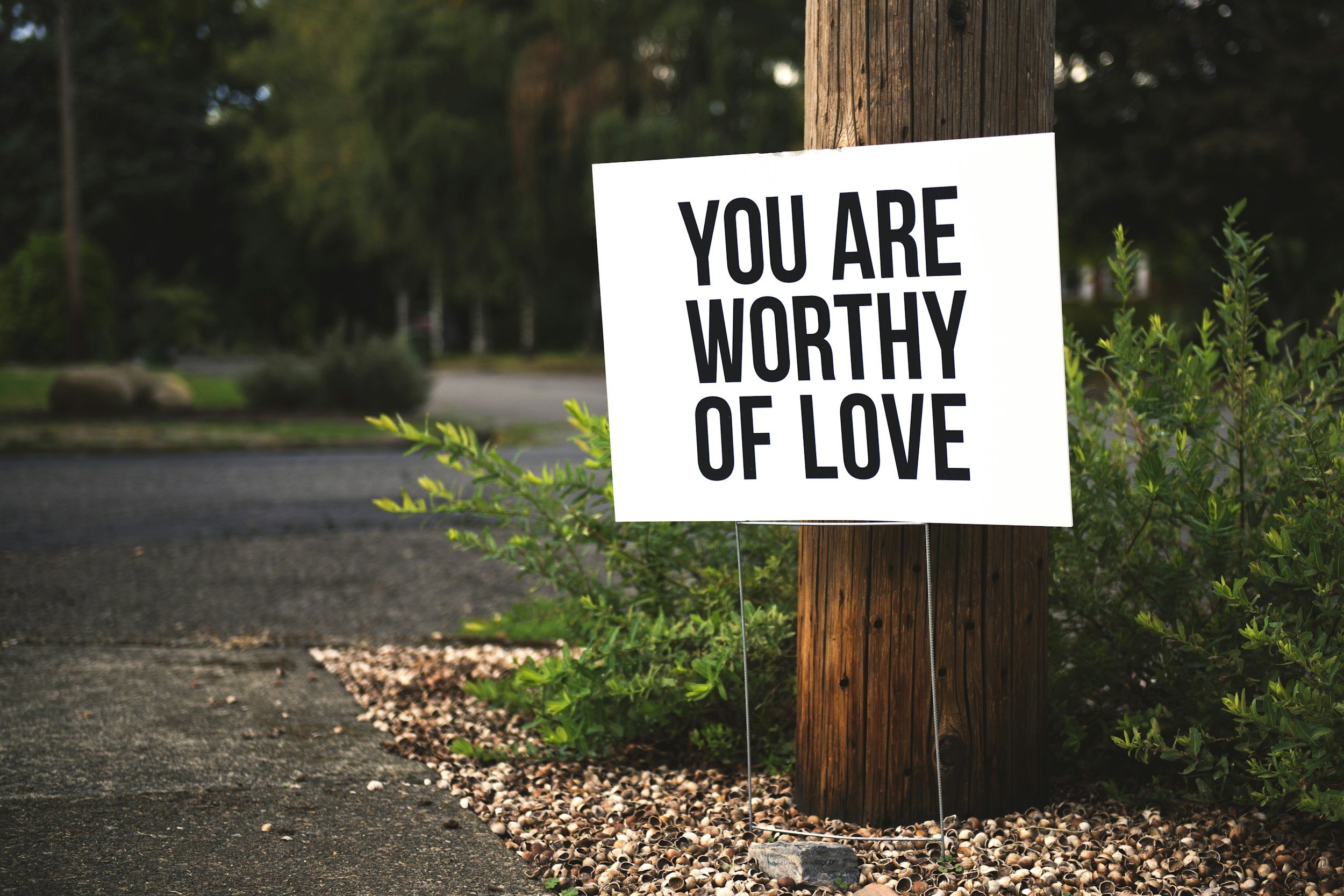
You are safe. No matter what happens, you are worthy of love. It doesn’t matter if you can’t finish this prep on time or at all. It doesn’t matter if you have to call and cancel the procedure in the morning and do this all over again. You are still worthy of love. You are safe.
And… let’s just say I was able to do the colonoscopy in the morning.
Telling myself I am worthy of love is the most powerful tool in my arsenal when it comes to improving my mental health because I so often forget. My mind wants there to be conditions of when I’m worthy. I have to be the smartest, most successful, most perfect person in the room. I have to have a perfect body (both inside and out). I have to say the right thing and do the right thing in every situation. When I’m not that person (which is basically all of the time), I question myself.
In the self-help world, I often hear the phrase “shift your perspective.” Maybe it’s through positive self-talk. Maybe it’s through creating a list of all the things you’ve done well to build your self-confidence. Maybe it’s through seeing things through a new pair of metaphorical glasses. And sometimes these things work for me. But sometimes I’m buried so deep in the negativity and shame spiral that it’s hard to see anything positive, let alone believe it.
On the other hand, telling myself I’m worthy of love despite messing things up or not living up to my high standards always works.
The reason positivity and similar doesn’t work is because it doesn’t really address my biggest fear: that one of these days one of these flaws is going to be big enough that I will no longer be worthy of love. There’s no past evidence or perspective change in the world that can guarantee I won’t mess up again and put myself at risk for rejection. So it feels sometimes like the only way to prevent that is to beat myself up until I’m perfect (which doesn’t really work well either, but some part of me believes it’ll work better than forced positivity, so it doesn’t work to let up).
But if I can mess up and STILL be worthy of love? Suddenly the perfectionistic part of me doesn’t have anything to be scared of. I might have to repeat it several times until I start to believe it, but it doesn’t feel dishonest. I’ll make more mistakes, I won’t succeed, and it doesn’t matter. I can still be worthy of love. My mind breathes a sigh of relief and then I can start to proceed from a place of clarity and maybe even positivity.
Too often, we try to pretend the parts of ourselves that seem negative or wrong don’t exist. But they do. Perfectionism tells us that we need to strive to get rid of these parts of ourselves, but really what we need to do is learn to accept that we’re human beings with flaws and give ourselves some grace. To love ourselves even if the so-called negative trait never goes away. That’s when perspective changes can start to work their magic.
For instance, maybe I’m beating myself up for being lazy. I don’t want to be lazy. Lazy is “bad.” But I show myself I’m worthy of love even when I’m lazy, what happens after I stop beating myself up?
I might see that I’m having trouble working because I’m burnt out and in desperate need of rest. Or it might be because I don’t like the work I’m doing so I’d rather scroll social media. These “negative” traits are often signals something is wrong, but we store so much shame around them that it’s hard to step back and objectively see what’s really going on.
Going back to my colonoscopy, I was holding shame around a variety of things. I wasn’t following the prep instructions to the letter, so I felt shame I wasn’t following the rules perfectly. I knew how the prep phase had gone for me in the past as well as what the instructions said I should expect, and I felt shame that the reality of my circumstances weren’t matching the ideal of the instructions plus my past experiences.
Quite honestly, I hold a lot of shame around the fact that this was my fifth colonoscopy despite the fact that I’m 36. It was a reminder that my body is damaged and might never be 100% because I didn’t listen to the signs that I needed to make immense changes in my life for years. That took an immense toll on me physically and now I’m paying the price. There’s shame that I could do that to myself because I valued external perception over my own needs and desires.
When I acknowledged this was going on and focused on being worthy of love even if I couldn’t go through with the procedure this time around, I let go of the expectation that my body needed to be something it wasn’t (perfect, or a machine) and gave it permission to do whatever it needed to do without any pressure. And suddenly everything was fine.
We put so much pressure on ourselves to be something unrealistic and that almost always makes the situation worse. What if, instead, we choose to love ourselves despite the flaws? We might just find that is the first step to having everything fall into place.