You are the secret sauce
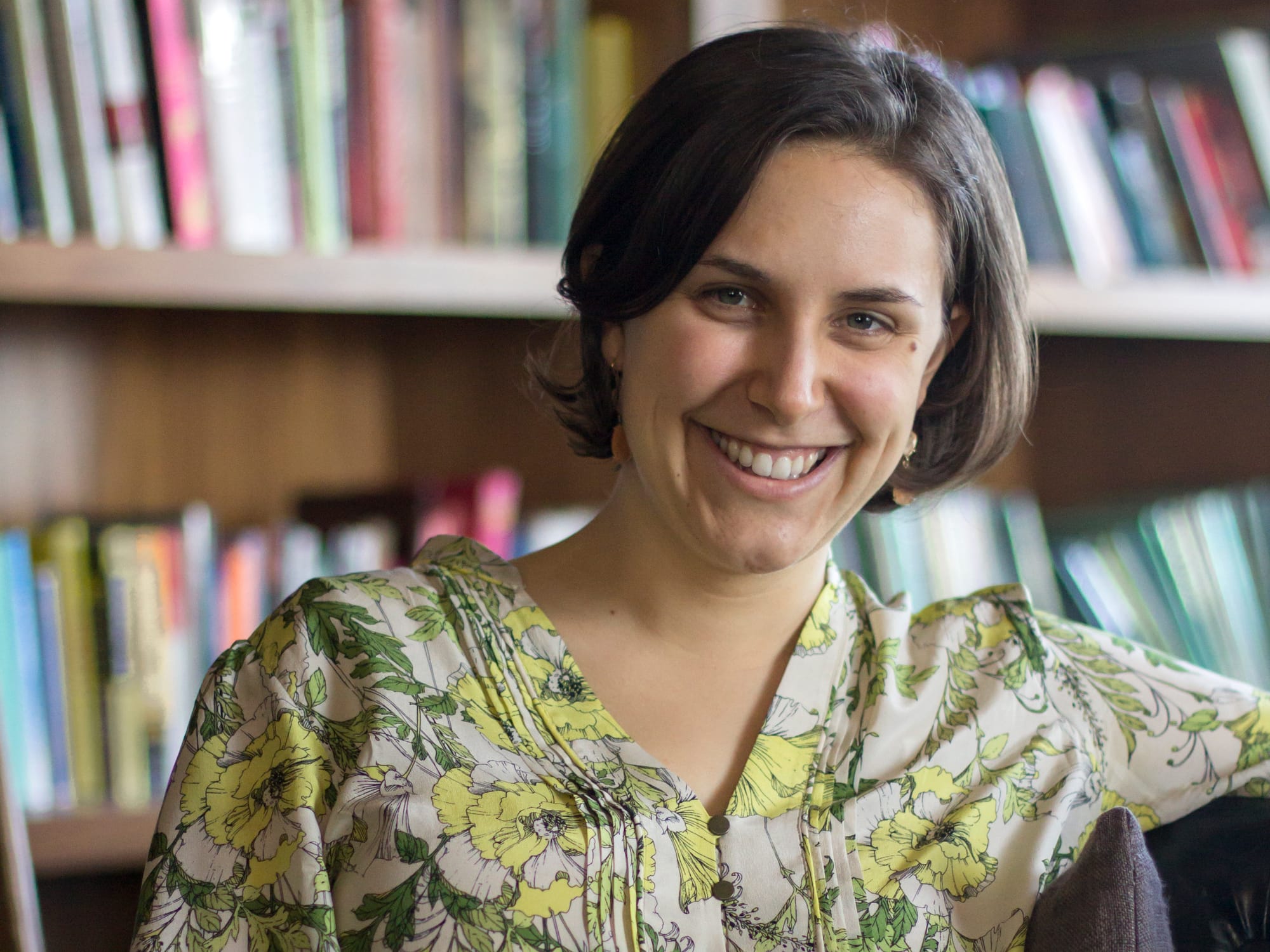
by Amy Schaffer

The other day I listened to some leaked audio from a Meta all hands meeting. They had just finished talking about layoffs and then moved on to answering a question about the AI training software newly installed on all their employees' devices. They insisted that this was just a way to give their company an advantage – to train their model on the actions of incredibly smart people.
Of course, the question on all our minds is: is this going to be used to further replace people at their job?
But I think that's actually the wrong thing to focus on.
Companies like Meta love for us to focus on this narrative because it pushes us into survival thinking. It's what makes us believe, I need to prove I'm the person they should keep. So you work longer hours, take on work outside your job scope to prove you're willing to do anything it takes, and go above and beyond in every area to prove your worth.
Except, we don't know why companies make the decisions they make. A lot of it, very likely, has to do with things outside your control like how much you make versus what your colleagues make or who got hired last. Sometimes it could quite literally be luck of the draw. I was just speaking to someone a few nights ago who was doing such a stellar job she was going to be promoted next month and then got laid off last week anyway.
Focusing on what is uncontrollable tends to lead to fear-based action in an attempt to find some semblance of control. It's extremely difficult to take calm, grounded, holistic action when there is constantly a threat that you could be laid off at any minute. To be honest, that is probably a big reason layoffs are coming hard and fast right now – to push people into such a state of fear that they'll take far less money and take on a lot more work because it feels like jobs are scarce. But that's a conversation for another day.
Getting back to this conversation, what is the alternative? To focus on this more empowering tidbit:
You are the secret sauce.
You. The employee that is supposedly so easily replaced. You're the one producing the work that makes the company worth anything. If you and your fellow employees decided to collectively stop working (whether you were part of a union or not), your company would not be able to function.
Additionally, AI is worthless without us and our data. LLMs like ChatGPT and Claude are trained on our data. But even with all this data, a chatbot can't do anything without someone inputting a prompt or setting up an automation, and the output still needs to be checked for accuracy. Going back to the first paragraph, Meta knows that if they are going to produce AI software that is good at tasks that employees do, they need real employee data to train it well.
And if we, the everyday people, are that valuable, isn't it time we recognize it?
You might be thinking, okay, so maybe we bring value. Maybe we're the reason companies can even exist in the first place. Maybe we have all these incredible gifts to share with the world and produce some cool things. But what does recognizing that actually do? Corporations and the rich hold all the power, right?
Well, I would argue that's only as true as we make it. Because if we bring the value, we actually have a lot more power than we realize. Corporations work endlessly to make sure we don't realize it because if we did, we would demand so much more than what we receive right now (see Prop D currently on the ballot in San Francisco for June and on the ballot in Los Angeles in November).
If we stop focusing on the fear and the scarcity, it's easier to recognize the power we hold and embrace it. And then from there, we can start to imagine a world that is centered around the value of the everyday person rather than the corporations and billionaires.
Kristianna Smith often talks about the importance of imagining the world we want to live in, even (or maybe especially) if that world feels impossible. We know the world we currently live in is broken. The thinking that got us here is not going to bring us a more equal world that recognizes the value of every person. The systems we've built need a serious overhaul. But unless we know what we're building toward, we're just taking random action that might not lead anywhere or might lead somewhere worse than what we have now.
A big reason why the civil rights movement, for example, was so effective is because so much time went into imagining what they wanted and then guiding everyone toward that vision. The actions they took weren't random – they were stepping stones toward a specific goal with specific demands.
This video from Life with Machines gives a fantastic example of what some of that imagining looks like at this moment in time when CEOs are blaming AI for taking jobs (the imagining part starts around the 12 minute mark, but the rest of the video gives a lot of great context).
Additionally, I want to bring attention to our mindsets around work because without changing those, it's extremely difficult to reshape systems into something that will actually be more supportive and healthier for everyone.
We've all absorbed stories about work that we've probably never questions. Stories about how certain types of work are done by certain types of people. Stories about how certain jobs aren't as skilled or didn't require as much schooling as others and therefore don't deserve as much money. Stories about what ambition looks like – a certain way of thinking, sleeping when you're dead, always saying yes. Stories about how growing is good and contracting is bad.
And to me, this is one of the biggest places reimagining needs to happen because a lot of these stories exist to uphold the status quo. You cannot, say, build a system that prioritizes more rest if most people believe that rest is for the weak. You cannot build a system where everyone has a livable wage if most people believe that you need a super expensive degree before you earn the right to more money. You cannot demand companies stop using excessive layoffs as the answer to contractions in profit if most people believe that companies should magically be able to grow forever and that there's no way to predict a contraction is coming.
So....
What if, instead of valuing certain types of work, we saw all types of work as important? This includes blue collar work, creative work, service work, janitorial work, administration work, teaching work, caretaking work, etc. I imagine this would lead everyone to have more freedom to find a job that's a really good fit rather than get limited to a set of jobs they're expected to take. It ideally would also give people more flexibility to take on different kinds of work if something changes in their life.
What if, instead of telling people they just need to take a job any job so they can be productive members of society, we prioritized the exploration and cultivation of someone's unique gifts and interests so they're more likely to find work that lights them up. Not only would they be happier, they would also likely contribute something more impactful to the world because the work that is sustaining them financially is also sustaining them on a soul level.
What if, instead of attempting to always grow (which is impossible, by the way – as I've heard many people say recently, the only thing that grows forever is cancer), we focused solely on the impact of our work? Work would be a lot more interesting if every single project had real intention behind it rather than just building something because growth is needed. The products and content we interact with would be higher quality because the goal wouldn't be to always produce even if there's nothing to be said or built. And having a real positive impact on others is far more fulfilling than pushing out work for the sake of checking a box on a to do list.
What if we embraced the fact that everything happens in cycles and that contraction is not only natural, but expected? We could demand that companies not over hire in moments of growth and better plan for moments of contraction. We could encourage more vacations and shorter work days during slower times knowing that will set employees up to perform better during busier periods because rest is necessary for wellbeing, innovation, and creativity.
What if we normalized trying a job, evaluating how it feels, and then deciding where to go next in your career based on that data? I imagine more people might try a few jobs out before committing to a career path without worrying about looking sporadic, indecisive, unreliable, or like a failure. We might suggest students take on a couple of paid internships or apprenticeships before shelling out money for a college degree so they can feel confident in their investment or decide if it's even necessary.
What if a good day's work didn't mean being productive every minute of the work day? Or, to put it a different way, what if the definition of "productive" expanded? For instance, in writing it's not uncommon for a good day's work to involve staring at a wall imagining what comes next.
There are probably dozens more "what ifs" that could go here, but the point is reimagining how we think about and approach work is crucial to reimagining the systems we need to rebuild to create change.
So I implore you to start to imagine. You can do that by:
- Recognizing your own value
Again, if you don't believe in your own value, how are you going to be able to imagine a world that centers upon that value?
So really sit with this: You are valuable and you are enough just the way you are right now.
Do you believe it?
On the days where I don't (which is often) I repeat this to myself over and over until I believe it more than the doubt.
You can also look for evidence. List out everything you do. Recall all your big and small wins. Ask coworkers how you've helped them. Search your emails and Slack messages for messages of thanks or praise.
And also, because we're not just our work, remind yourself of all the other things that make you awesome. The way you help others, the cool ideas you have, the creative projects you've accomplished, the ways you're growing and changing, the relationships you nurture and cherish.
You're incredible. Every time you doubt it, remind yourself so you can remember what you're fighting for.
- Asking yourself what you want to change for yourself and everyone else
Now that we've established how awesome you are, and through implication how awesome other people are too, do you like how work is currently set up? If not, how would you change it?
Again, you might need to examine your beliefs about work and ask if they're actually true or if they've been passed to you in order to uphold our current systems.
Again, you might think something that you want is impossible.
Dare to challenge those beliefs and dream those dreams. You're not committing to something permanent, you're imagining the possibilities. Eventually you might find that you can't implement things exactly as you imagined, but it's okay to make adjustments as you go along. We're not looking for perfection here, we're looking for something bold and big that will get shaped over time.
- Taking action
Have conversations with members of your community and create a shared vision. Teach your kids how to value themselves by valuing them and yourself. Learn from people who have already been doing this work to broaden what you think might be possible. Get involved in movements that are already working to create change. Talk to your politicians. Vote for measures that make the systemic changes you want. Put up boundaries in how you work. Speak up at work when something needs to be said. Start your own thing if corporate work isn't working for you anymore.
There are so many ways to create a world that recognizes that each and every person is valuable. You don't have to (and shouldn't) do all of them, but do something. Not only does it help create change, it gives you even more proof of just how powerful you are.
I'd love to know what you think of this essay in the comments below.
If you got value from this, please share it with your community.
And if you haven't already, you can subscribe by hitting the "Subscribe" button at the very bottom of this page.