You can’t checkbox your way to healing
by Amy Schaffer
When I started homeopathy eight years ago, my homeopathic practitioner gave me a remedy to buy, the number of doses to take, and how long to take them. I followed the instructions dutifully, and when I finished the bottle was still mostly full. And I thought, what the heck do I do with these now that I’ve completed this remedy?
If you’re unfamiliar with homeopathy, the idea behind it (at least how I interpret it) is that every natural substance has an energetic signature that maps to certain qualities or stories. We humans carry similar signatures that show as stories or beliefs that then translate into our actions and behaviors, and inevitably some of these become imbalanced within us because of things like social conditioning, how we were raised, the people we meet and interact with, and the situations we go through as we live life. Often, we are living at the extreme ends of a number of energetic spectrums but we don’t do anything about it because we don’t know how, it’s too painful to address it, or we don’t even realize something’s out of whack. Homeopathic remedies (which are made from various natural substances) push you to engage with the imbalanced energy and help you to rebalance it.
So I did the thing. I pushed myself into this energetic signature with the remedy. I engaged with that energy for a few weeks. My energy changed. Remedy complete. Checkbox checked. The rest of the pellets wasted. Right?
I was so used to this mechanical cycle of action, result, next challenge. But that’s not how things work in the natural world. And we are natural beings, not machines.
So, inevitably, at some point I tested a second time for a remedy I’d already “completed” and I was like, huh? But I already did that one.
Turns out that energy healing is not a series of checkboxes. You can’t just take one, heal that, move onto the next one, heal that, and eventually be “whole” when you finish the whole list.
Instead, it’s more like a ball pit that you’re trying to work your way through. You take the yellow ball off the top, work with that, toss it out of the pit. Then you pick up a green one and do the same. Maybe a red next. And then, suddenly, there’s another yellow. And then a blue, another green, and then another yellow. Again? Yes, again.
As it turns out, some signatures are core themes in our life and they come up over and over no matter how many times we’ve engaged and rebalanced them. Now, each time they come up they get a little easier to work with. Rebalancing happens faster or happens on a deeper level. But they never quite go away.
That’s the opposite of what instant gratification culture tells us, which is that you take this pill, buy this thing, attend this webinar, etc., your issues will instantly be fixed. (I think most of us know that this isn’t true, but that’s the story we’re sold and we often believe it because it feels way easier than the alternative).
I’ve seen therapists talk about this as well when it comes to mental health. People will go to therapy. They will process and learn new new tools. They’ll start to feel better and suddenly, whatever triggers them will come up again and it will impact them similarly to how it did before. When they come back to therapy, they will say they aren’t healing because they feel bad again. That all the work they’ve done wasn’t effective. But the goal of all the work they’ve done wasn’t to make their reaction to that trigger disappear. It was to give them the tools to recognize what’s happening and work through the situation more effectively so that wave is a little shorter or more manageable.
The same is even true of physical healing. When I’ve had to go to physical therapy because I’ve gotten an injury after years of sitting at a desk all day and not exercising, it takes months to build up the strength to stabilize that shoulder or those knees. And then if I don’t keep doing my exercises and increasing the challenge, I’m back at the physical therapist’s office a year or two later.
If something has been impacting us for years, why would we expect it to disappear overnight? It doesn’t make sense. But we’re trained to believe that every problem should have an easy and predictable fix. And if we’re unable to do that? Then we believe we’re failing.
This belief is essentially the equivalent of plotting your healing journey on a graph day by day (and yes, I was a math nerd in high school). It looks like chaos! You might be at a 5 one day and a negative twelve the next. You might as well be making random squiggles because there’s no predictable pattern and often no consistent “better” state.
But, if you were to just look at the dots that mark the yearly anniversaries of working with a long-term healing modality, you’ll notice an upward trend. Maybe it’s not a very steep slope, but it’s perceptible. And if you look at every 2 years it’s more perceptible. And even more so every five years.
Deep healing can truly only be measured in the long term.
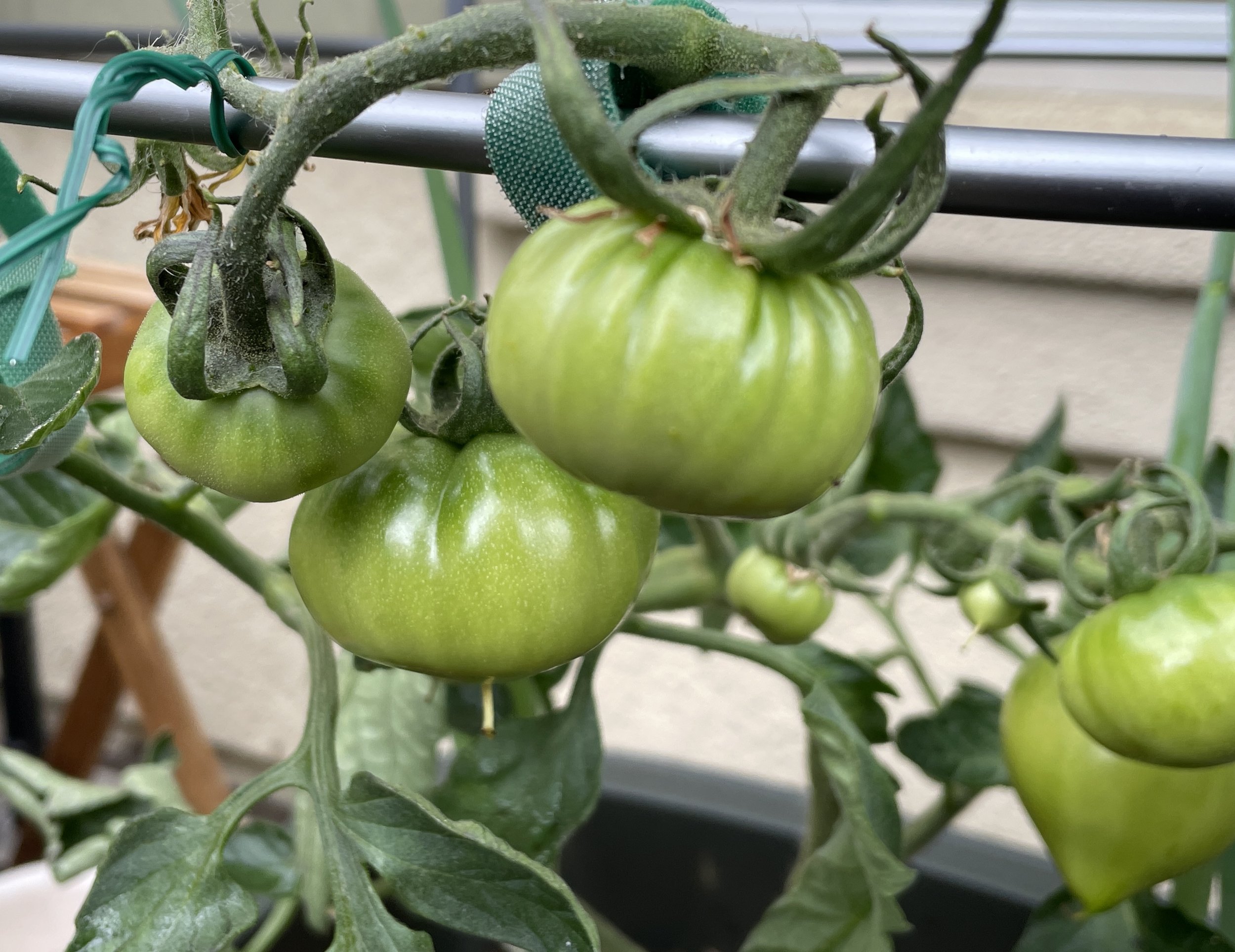
This is how nature works. If you’ve ever done any gardening, you know that it’s a very slow process most of the time. It takes months for a seed to germinate, sprout, flower, get pollinated, and grow whatever it’s meant to grow. In my garden, our tomato plant started flowering 4-6 weeks ago and now we have some beautiful tomatoes growing, but they’re all still green! I have no idea when they’ll start turning red. It might be next week, it might be in another month. And those are the easy plants to grow! It takes a lot of tending and nurturing and patience to reap the results (assuming a gopher doesn’t eat them first).
[caption id align="alignnone" width="3573"]
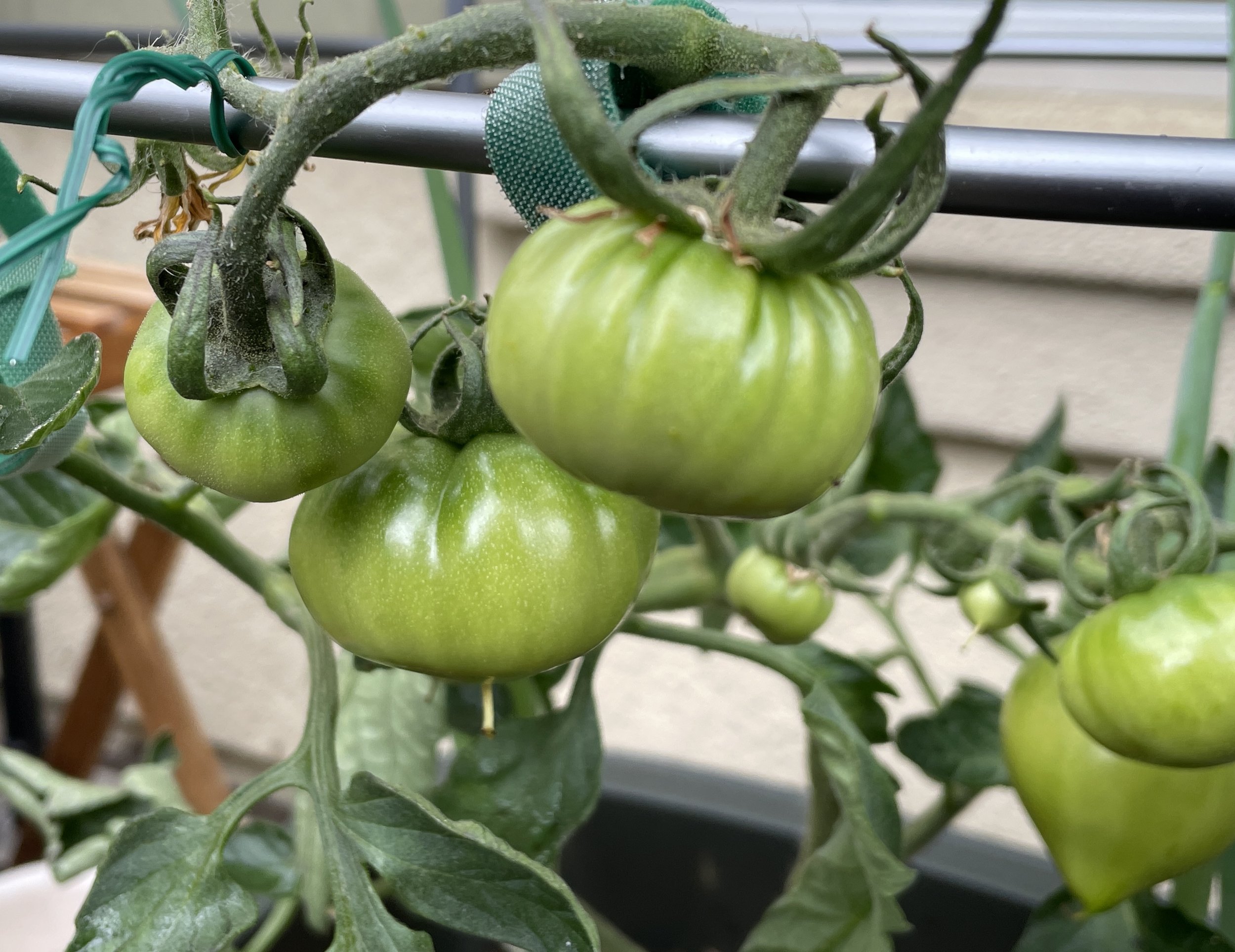
Look at these little guys grow! Slow, imperfect, and a little messy, but ultimately beautiful (and eventually delicious). [/caption]
From the point of view of our manufactured, instant access world, this feels like a lot of work and kind of boring. Why would you wait months for a tomato plant to grow and ripen some tomatoes when you can go to the grocery store and just pluck one off the shelf ready to eat?
Because it’s much more satisfying (and delicious) to pick a tomato from your garden fresh off the vine. You get to watch it grow and understand its needs and intricacies. To assist it as it becomes something so much bigger and bolder than the seed it started as. To get your hands dirty and maybe even break a sweat as you nurture this living thing.
This is what long-term healing does too. It’s slow. It can be painful. It requires a lot of work and tending, and often feels like nothing is happening or that you’re backsliding. But over time you start to understand your own needs and intricacies. You see where you’re living more fully or boldly, or maybe more balanced and calm. And you look back a few years down the road and you see how things have changed and you realize, oh, this is what healing looks like.